Most climate communication fails at the same point. It tells you everything is interconnected, that the scale of the problem is planetary, that the systems at risk are deeply complex. All of this is true. It’s also nearly impossible to hold in your mind in a way that produces anything other than a vague sense of dread.
The World Day for Glaciers, observed annually on March 21, works differently. Not because it offers more information, but because it offers less — and more specifically.
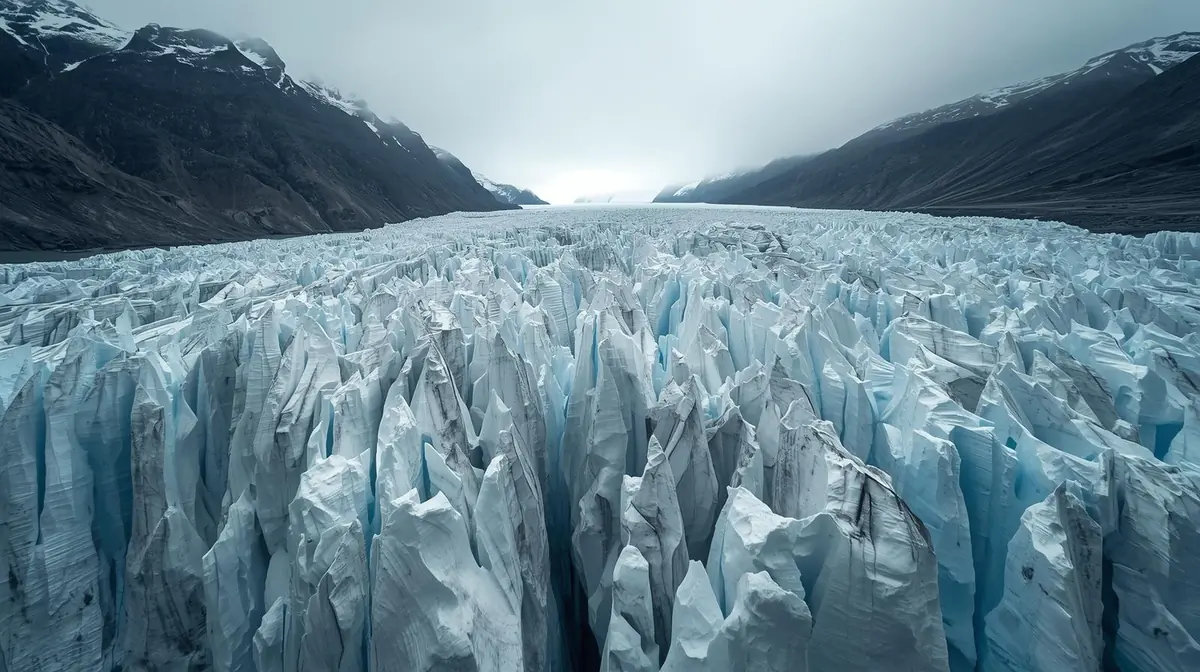
Glaciers are comprehensible. You can see them. You can photograph them over decades and put those photographs side by side. You can point to a specific glacier in a specific mountain range and show what it looked like in 1950, in 1990, in 2020. That specificity is rare in environmental storytelling, and it changes how the information lands.
The UN General Assembly proclaimed March 21 as World Day for Glaciers in recognition of the role glaciers play in global freshwater supply, in local ecosystems, in sea level dynamics. That framing alone — freshwater, ecosystems, sea level — connects glacier loss to things people can understand: drinking water, agriculture, coastal cities. The glaciers themselves become a proxy for a much wider set of concerns.
What the day does well is something that formal climate communication often doesn’t: it gives people a single thing to pay attention to. Not the whole system, not the full report, not the cumulative evidence of three decades of research. Just this: glaciers are retreating faster than at any point in the recorded past, and that matters in ways that can be shown rather than just argued.
The emotional register helps too. There’s something about glaciers specifically — their age, their silence, their sheer scale — that carries a different weight than statistics. A photograph of a glacier that has lost a kilometre of ice since your parents were born is harder to dismiss than a global average temperature figure. The visual record is the argument.
This is not unique to glaciers. Conservation communicators have known for years that specific, visible, nameable subjects — polar bears, coral reefs, specific rivers — generate more response than diffuse systemic warnings. What the World Day for Glaciers does is apply that principle to something whose story is particularly well-documented and whose implications are particularly broad.
There’s a lesson in that for anyone trying to communicate environmental risk. The planetary scale of climate change is real, but it’s not where persuasion happens. Persuasion happens at the level of things people can see, imagine, and follow over time. The best environmental stories have always known this. The World Day for Glaciers is a reminder that the science community is starting to know it too.
Glaciers, it turns out, are very good for that.