If forests are the lungs of the Earth, wetlands might be its kidneys.
They rarely make headlines. They’re often dismissed as swamps, marshes, or muddy wastelands. Yet wetlands quietly perform some of the most important environmental jobs on the planet — and most of us hardly notice.
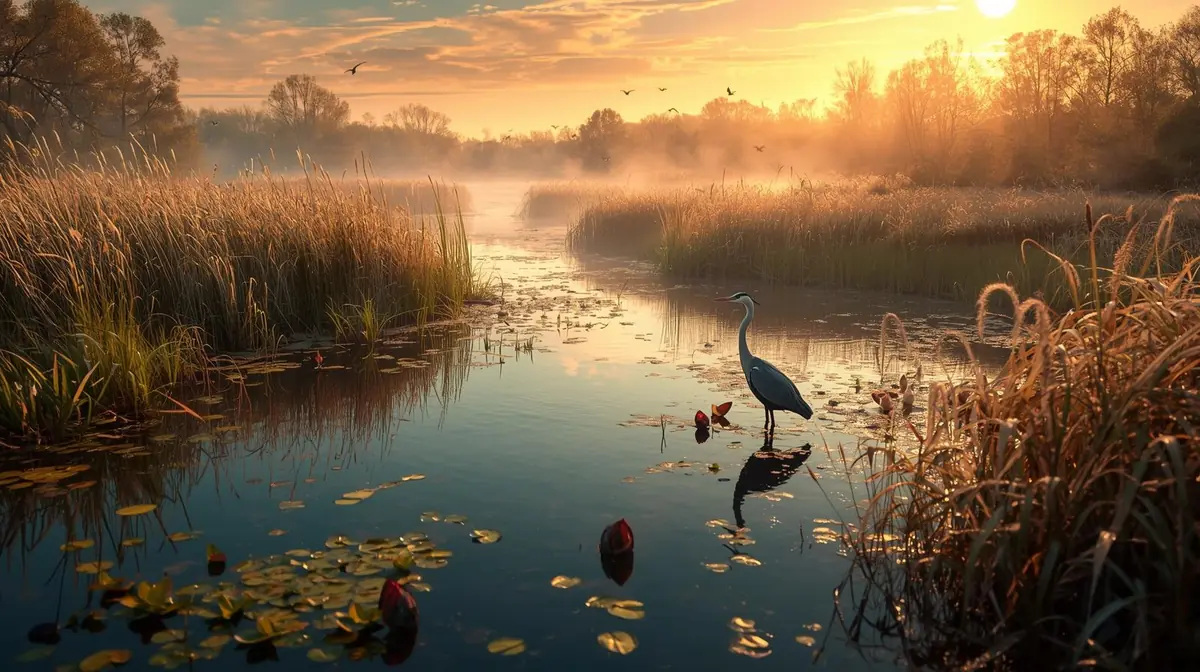
At their simplest, wetlands are areas where land meets water. That might be a marsh, a mangrove forest, a floodplain, or even a seasonal pond. What makes them extraordinary is what happens beneath the surface.
First, wetlands are natural water filters. As water flows through reeds, grasses, and soil, pollutants and excess nutrients are trapped or broken down. Sediment settles. Harmful bacteria are reduced. By the time water exits a wetland, it’s often dramatically cleaner. Cities spend billions building treatment plants to do what wetlands have done for free for thousands of years.
Second, wetlands are powerful flood protectors. They act like sponges, absorbing excess rainwater and slowing its movement. During heavy storms, this buffering effect can reduce the severity of floods downstream. Remove the wetland, and water has nowhere to go — it rushes straight into streets, homes, and farmland.
Then there’s carbon. Wetlands store enormous amounts of it, especially in their soils. Because wetland soils are waterlogged, plant material decomposes slowly, trapping carbon underground instead of releasing it into the atmosphere. Some wetlands store more carbon per square meter than forests, making them crucial in discussions about climate stability.
They are also biodiversity hotspots. From amphibians and insects to birds and fish, wetlands provide food, shelter, and breeding grounds. Many migratory species depend on them as stopover points. Lose the wetland, and entire food chains begin to unravel.
They can even protect coastlines. Mangrove wetlands and marshes reduce wave energy and help buffer storm surges before they hit inland communities. That makes them important not only for ecology, but for infrastructure, insurance risk, and the long-term resilience of places vulnerable to rising seas.
And yet, wetlands are among the most threatened ecosystems worldwide. They are drained for agriculture, filled for development, or altered by pollution. Often, the damage isn’t obvious at first. The water simply disappears. The birds stop returning. The land seems usable — until floods worsen, water quality declines, or wildlife populations collapse.
What makes wetlands remarkable is not their appearance but their function. They don’t tower like mountains or stretch like forests. They sit quietly at the edges — working.
The next time you pass a marshy patch of land or a stretch of reeds by a river, look twice. What may seem like unused space could be one of nature’s most efficient systems — filtering, storing, protecting, and sustaining life without asking for recognition.
Sometimes the most powerful ecosystems are the ones we underestimate the most.