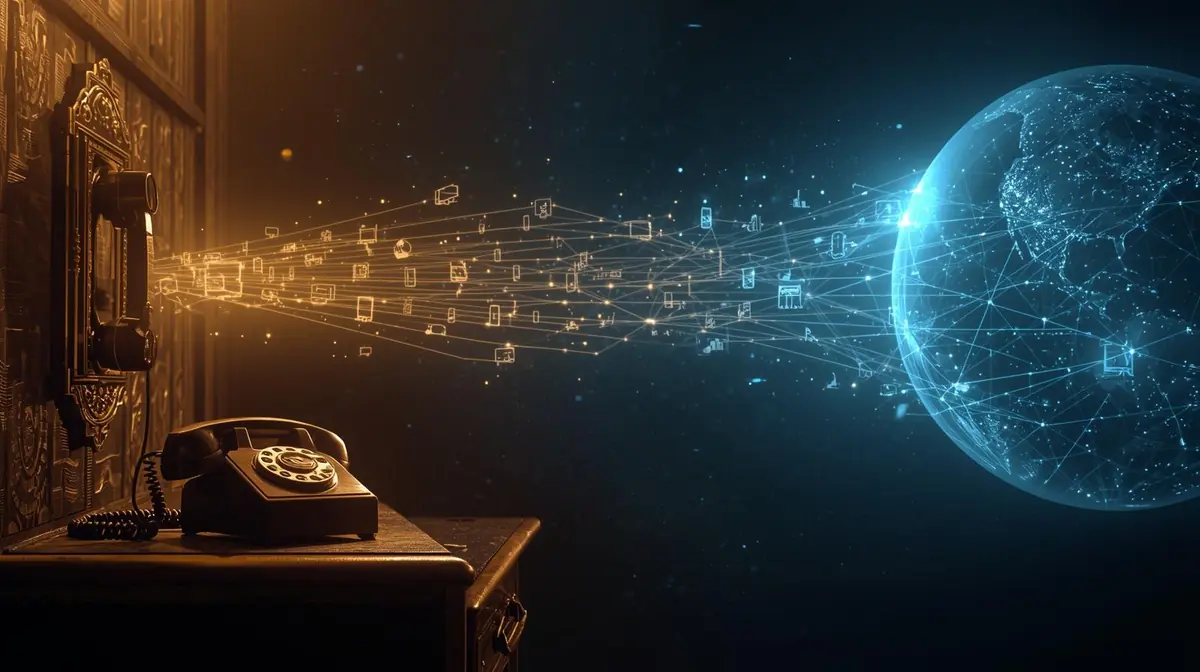
A text message takes seconds to dismiss. A voicemail changes the quality of your day. We have had 150 years to normalize the telephone, and voice still arrives differently than anything else we send each other.
The first telephone call, by Alexander Graham Bell in 1876, was remarkable for the obvious reason — sound traveling through wire across a room. But what took longer to understand is not how the technology worked, but what it was actually transmitting. Voice carries more than words. It carries breath, hesitation, mood, and something that resists transcription.
This isn’t romantic speculation. The field of paralinguistics — the study of vocal cues that accompany speech — has documented some of what voice communicates beyond its literal content. Pitch and variation signal confidence or anxiety. Pace suggests urgency or ease. Small sounds — a brief sigh, a hesitation before answering, an exhale mid-sentence — convey meaning that no punctuation can replicate. When you read someone’s words, you supply those cues from your own imagination. When you hear their voice, you receive them directly.
For most of those 150 years, voice was the default long-distance medium. Then came text messaging, email, and the whole written-first stack of modern communication. Voice didn’t disappear — it shifted to becoming a choice rather than a necessity. And that shift changed its meaning. Calling someone, instead of messaging, is a small act of commitment. It requires simultaneity. It cannot be ignored and answered later at a convenient moment. It takes time in real time.
This is why, for many people, phone calls have become associated with either closeness or urgency. The people you call without warning are the ones you trust completely, or the ones relaying bad news. Scheduling a call for anything in between signals its weight — it marks an occasion, not just a communication. Voice has become significant precisely because it’s no longer default.
There is also something harder to name: voice is the most immediate proof of presence. A text could have been written hours ago, queued, drafted and redrafted. A voice, heard in the moment, cannot be curated in the same way. The stumble on a word, the quiet before an answer, the slight rise at the end of a sentence — these happen in real time and cannot be edited out. That unscripted quality is what makes voice feel intimate, and why a recorded message from someone gone feels so different from reading their letters. The rawness is the point.
One hundred and fifty years after Bell’s first call, voice has outlasted every prediction of its obsolescence. Not because it’s convenient — often it isn’t. But because it does something the written word cannot: it puts a person in the room. Everything else we’ve built for communication moves toward efficiency. Voice remains stubbornly present.