In a childhood shaped by glowing screens, autoplay, and endless scrolling, it is easy to forget that stories once felt physical. A child could hold a book, flip a cassette case open, or choose a CD from a shelf. Storytime was not only heard or seen. It was touched. That tactile connection gave stories a kind of weight, and for many children, that still matters more than adults realise.
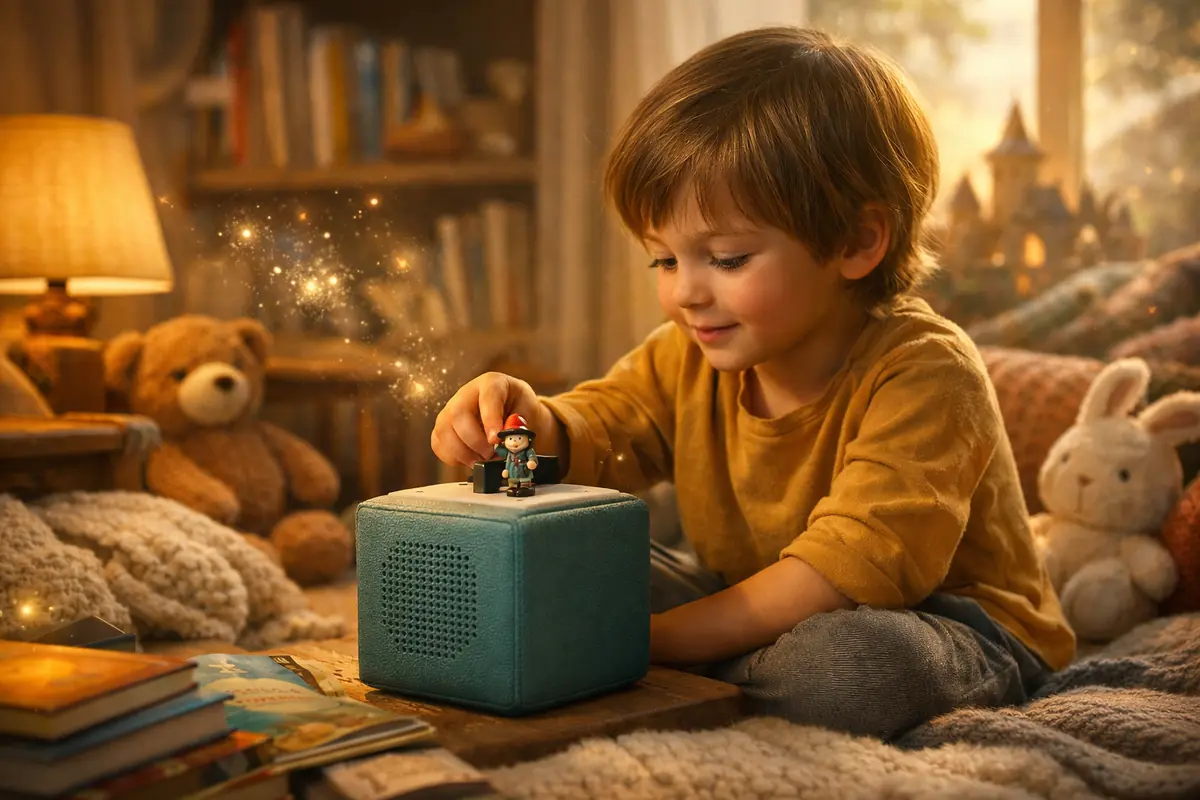
This is part of what makes devices like the Toniebox so appealing. When a child places a figurine on top of the box, the story begins in a way that feels direct and personal. It is not just another button press. It is a small action with visible meaning. The child chooses the character, starts the audio, and watches the story come alive through something they can physically handle.
That simple act matters because touch helps children feel involved. A tablet often makes entertainment passive. Tap once, and the device does the rest. A tactile story system feels different. It invites intention. The child is not only consuming a story. They are participating in it. That sense of control can make the experience feel more memorable, more calming, and more special.
There is also the growing desire for screen-free alternatives. Many parents are looking for ways to reduce overstimulation without removing entertainment altogether. Audio storytelling offers a middle ground. It keeps children engaged, but it leaves room for imagination to do the visual work. There are no flashing ads, no chaotic menus, and no constant temptation to jump to something else after thirty seconds.
That matters because imagination thrives in quiet spaces. When children only listen, they build the world in their minds. They picture the characters, imagine the setting, and fill in the emotional tone themselves. In many ways, that makes the experience richer than watching a fully designed scene on a screen.
Tactile storytelling can also nurture independence. Children learn to choose what they want to hear, repeat favourites, and manage storytime on their own. That builds confidence in small but meaningful ways. It turns listening into an activity they own rather than something always managed by an adult.
There is a practical comfort in that rhythm too. A physical story object creates clearer boundaries than a general-purpose screen. One figurine usually leads to one story, not an endless chain of options. That simplicity helps children settle into the experience instead of being pulled into constant switching and stimulation.
The clever part is that this feels both old and new at once. The technology is modern, but the emotional experience is familiar. Children still want stories that feel personal, comforting, and real. Sometimes the future of storytelling is not about adding more stimulation. It is about bringing back a little more wonder you can hold in your hands.
This article contains affiliate links. We may earn a small commission if you buy through them, at no extra cost to you.
Worth considering
Toniebox Starter Set — The audio player described in this article. Children place small character figurines on top to start a story, giving them a tactile, screen-free way to choose and control their own listening. Stories are sold separately as Tonies figures.