Most internet-born home aesthetics die quickly. They appear in Pinterest mood boards, peak in TikTok home makeovers, hit the high street via fast-home retailers, and collapse under irony before anyone has actually committed to the paint colour. Cabbagecore is following a version of that arc — but it has genuine design logic underneath it that suggests it might outlast the initial meme, and it is worth understanding why.
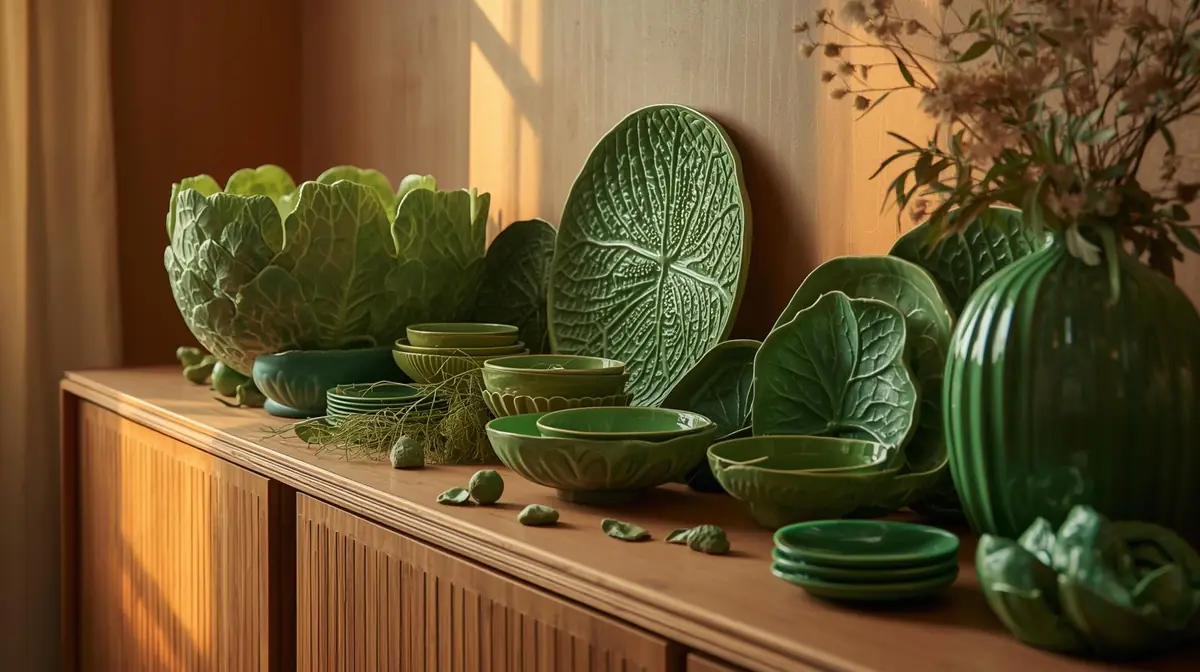
The aesthetic centres on dense, lush organic shapes in home interiors: leafy ceramics, cabbage-shaped bowls and vases, table linen with botanical prints, candleholders and planters that look like they came from a Victorian greenhouse. The visual DNA sits somewhere between English country garden, Italian grandmother’s kitchen, and maximalist biophilic design. It sounds absurd. It also fills a very specific cultural need.
What cabbagecore is reacting against is the clean, spare, neutral interior that has dominated design media for the better part of a decade. White walls, blonde wood, muted ceramics, plants arranged in matching terracotta pots — the Scandinavian-inspired minimalist aesthetic has been so dominant for so long that its opposite has become genuinely appealing. Cabbagecore is emphatically not neutral. It is leafy, slightly odd, deliberately impractical in parts, and insistently alive-looking.
The stronger design rationale is biophilic — the instinct to bring organic, nature-derived shapes and textures into interior spaces. That trend has strong foundations: research on how natural forms affect mood and perceived comfort is consistent, and biophilic design has been growing for years. Cabbagecore is a more exaggerated, internet-inflected version of the same underlying impulse. Where conventional biophilic design adds a fiddle-leaf fig or a live-edge shelf, cabbagecore adds a ceramic cabbage centrepiece and leans deliberately into the oddness of the object.
What tends to give an aesthetic staying power beyond its initial viral spike is commercial availability at multiple price points. Cabbagecore has passed that test relatively quickly. Cabbage-shaped ceramics have appeared in mass-market homeware stores, not just boutique imports or high-end craft markets, which means the aesthetic is accessible enough to actually travel into ordinary rooms. Once a trend is buyable at different budgets — a £12 cabbage bowl from a chain store or a £200 hand-thrown version from a ceramic artist — it tends to persist because people are genuinely purchasing it, not just pinning it.
The aesthetic will inevitably shade into self-parody; in some corners of the internet, it already has. But the underlying mood it represents — less generic, more personal, permission to decorate in a way that is unmistakably yours — is likely to outlast the specific cabbage motif. As we head into 2026, that shift away from safe neutrality is one of the more genuine signals in home design. The cabbage will move on. The appetite for a more expressive home will not.