Family dinner is often sold as a miracle ritual. Sit together, talk for twenty minutes, and somehow raise calmer, smarter, happier children. Real family life is messier than that. Some nights dinner is rushed, someone is grumpy, and one child refuses the vegetables on principle.
Still, the basic idea survives the chaos for a reason: shared meals create one of the few natural pauses in modern family life.
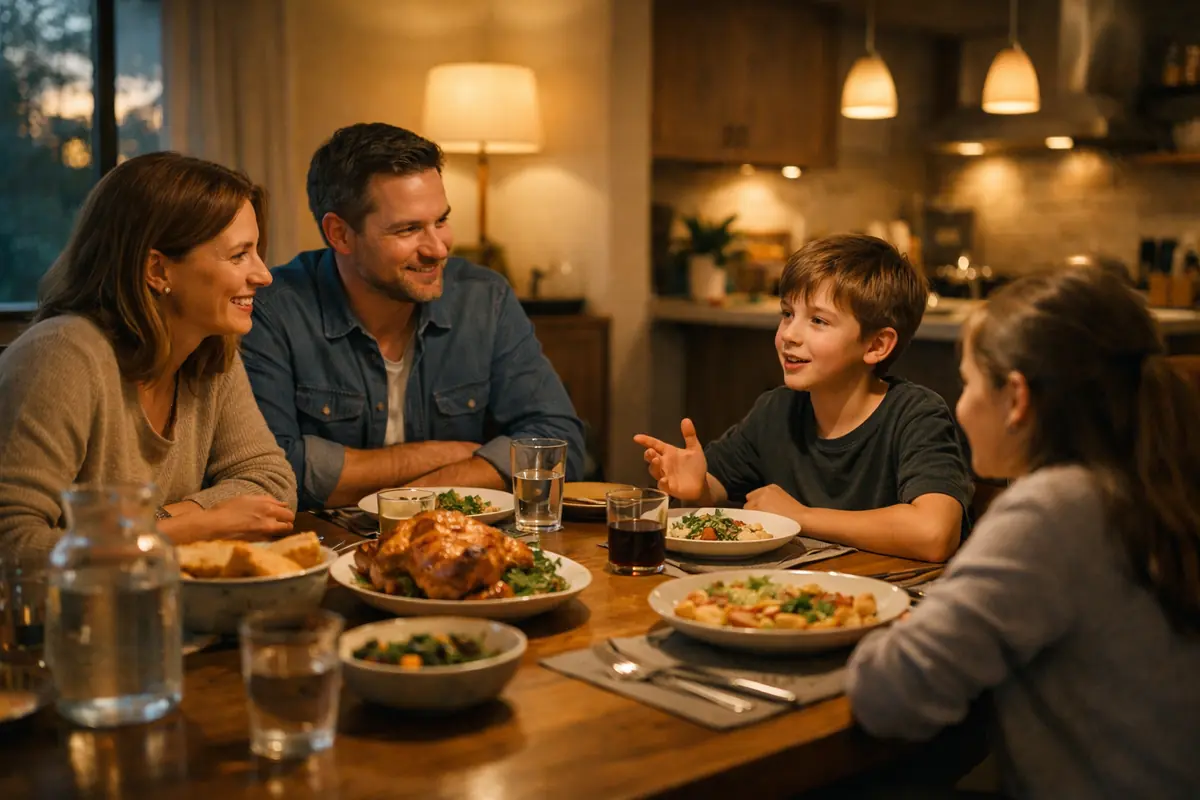
What makes that pause valuable is not the food itself. It is the repetition. When a family eats together regularly, children get repeated exposure to conversation, turn-taking, listening, and small social cues that no app or activity can really replace. They hear how adults tell stories, disagree, joke, and ask follow-up questions. Over time, that shapes how they speak and how they feel at home.
Dinner also does something subtler. It tells a child, without a speech, that family life is not only logistics. The day is not just school runs, work stress, WhatsApp messages, and packed schedules. For a little while, everyone is in the same place, paying attention to the same moment. That kind of ordinary togetherness is easy to underestimate because it looks so unremarkable.
That repeatability matters because children often open up indirectly. A formal conversation about feelings may go nowhere, but a remark over pasta about something odd that happened at school can become the start of a real exchange. Shared meals create the kind of low-pressure setting where those moments can surface.
Adults benefit from that rhythm too. Family dinners give parents a chance to notice small changes in mood, energy, or behavior that might never show up during rushed transitions in the car. A repeated shared moment makes patterns easier to see.
The pressure, though, is where many families lose the plot. A meaningful dinner does not need candles, perfect manners, or a home-cooked masterpiece. Rotisserie chicken, takeout pizza, or scrambled eggs still count. What matters more is that phones are mostly away, the television is not running the room, and at least one adult is genuinely present.
That is why family dinners still matter. Not because they are magical, but because they are one of the last repeatable habits that make belonging feel visible. Children rarely remember the menu. They remember the atmosphere: whether the table felt tense, distracted, warm, funny, safe.
Even a few shared meals a week can do that work. The point is not perfection or nostalgia. It is giving family life a rhythm that feels more human than hurried.
And in a household where everyone is increasingly addressed by notifications, schedules, and errands, that kind of visible attention is not a small thing. It is one of the clearest ways a family says: we are still here together.
In the end, family dinner is less about nutrition than about attention. And attention, given steadily in small doses, is one of the strongest building materials a family has.