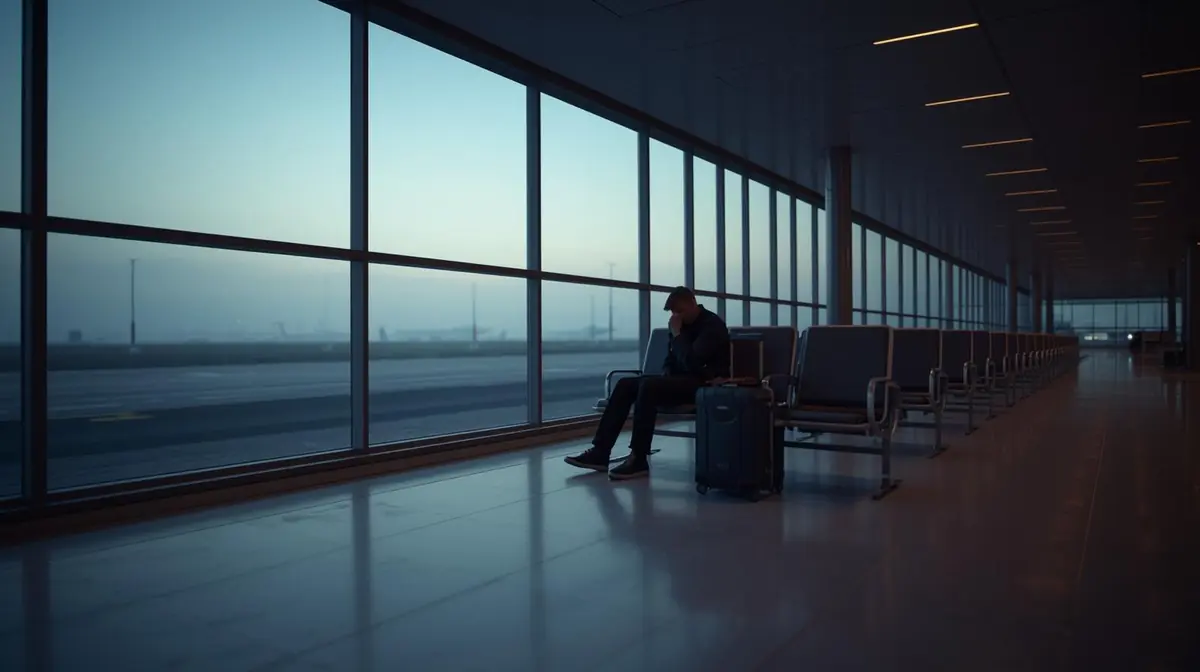
Jet lag gets more advice than it deserves credit for. Drink water, avoid alcohol, stay awake until local bedtime — some of it genuinely helps, some is overstated, and almost all of it underestimates the underlying biology.
The core problem is a mismatch between your internal clock and the local time at your destination. Your circadian rhythm — the roughly 24-hour cycle governing sleep, hormones, and body temperature — is anchored to your home time zone. It doesn’t shift automatically when you cross multiple time zones. It adjusts gradually, at about one to one-and-a-half hours per day. That’s why a nine-hour difference can leave you genuinely impaired for close to a week.
The most effective interventions target light exposure, because light is the primary signal your circadian clock uses to calibrate itself. Bright morning light at your destination accelerates adaptation when travelling east. Avoiding bright light in the morning helps when travelling west. The logic sounds simple, but it requires knowing which direction you’re adjusting and acting on that — not just wandering out into whatever sunlight is available.
When natural sunlight isn’t an option — a winter arrival, a windowless morning schedule — a light therapy lamp can partially substitute. A short session of bright artificial light, timed correctly, nudges the clock in the right direction. It won’t replicate outdoor intensity, but it’s a practical tool when you don’t have the luxury of time.
Melatonin, taken in low doses at the right time, can also shift the clock. A small dose in the early evening at your destination helps with eastward travel. The key word is small — 0.5 to 1mg is often cited as more effective for clock-shifting than the higher doses commonly sold, which are more sedating than regulating and can cause grogginess the following day.
Timing meals to local mealtimes from the day you travel appears to help too, though the effect is modest. The digestive system runs its own secondary clock, and feeding it on local time gives it an early signal that something has changed.
What doesn’t work as reliably as people assume: forcing yourself through a night flight without sleep, drinking extra water beyond normal hydration, or pushing through fatigue on willpower. Hydration matters for comfort — cabin air is dry and dehydration compounds tiredness — but it doesn’t reset the circadian rhythm. Neither does caffeine, which can keep you awake without moving the underlying clock.
The honest summary: light is the strongest lever, melatonin helps if used correctly, and everything else is marginal. The less recovery time you have, the more worth it is to be deliberate.
Jet lag doesn’t have a shortcut. But it does have a mechanism — and that makes it easier to work with than to fight.
This article contains affiliate links. We may earn a small commission if you buy through them, at no extra cost to you.
Worth considering
Why We Sleep by Matthew Walker — a deep, readable account of circadian science and sleep biology. The chapters on jet lag and circadian disruption are worth the read on their own.
Lumie Vitamin L Light Therapy Lamp — a compact SAD lamp useful for morning light exposure when natural sunlight isn’t available. Practical for eastbound travellers arriving in winter or with early-morning schedules.