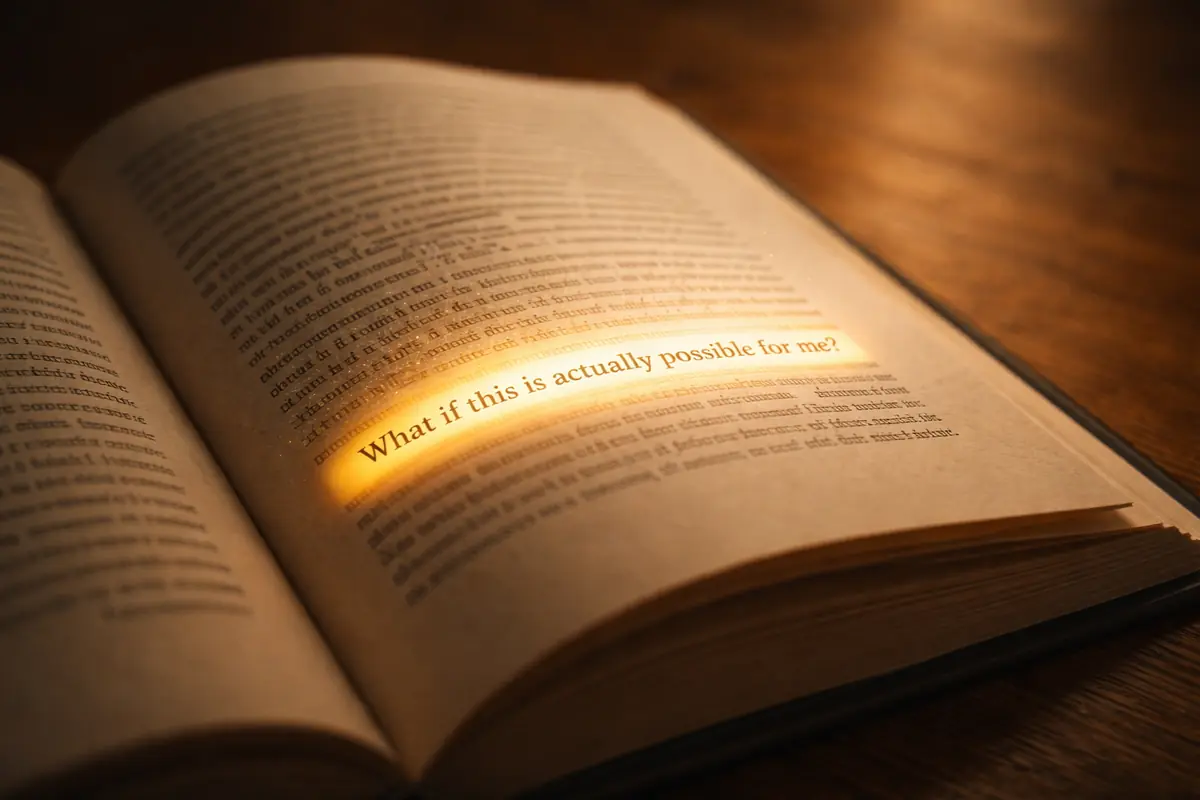
There’s a Japanese word for the pile of books on your nightstand that you haven’t opened yet: tsundoku. It combines the Japanese for “piling up” (tsunde) and “reading” (doku), and it describes the habit of acquiring books faster than you can read them.
Most people with tsundoku feel vaguely guilty about it. The books accumulate. The spine cracks once, if at all. The promise of reading them shifts month by month, never quite landing. But there’s a case to be made that tsundoku isn’t a productivity failure — it’s a sign of something more useful.
The writer Nassim Nicholas Taleb has a version of this argument in The Black Swan, borrowing the idea from Umberto Eco, who kept a private library of some thirty thousand books — the vast majority unread. Eco called it an “anti-library” and argued that the unread books were more valuable than the read ones, because they represent what you don’t yet know and remind you of that gap. A library of read books is a record of the past. A library of unread books is a map of possible futures.
That might sound like clever rationalization. But there’s a practical version of the argument that holds up on its own. A book you buy because it interests you is available when you’re ready for it. People often find that a book they purchased months or years ago becomes suddenly relevant — a topic surfaces at work, a conversation strikes a chord, a question crystallizes. The unread book is waiting. The one you never bought isn’t there to find.
This is different from purchasing books impulsively and forgetting they exist. That version of tsundoku is just disorganized consumption. But maintaining a considered collection — books chosen for real reasons, not because of a one-click impulse — creates a personal library with actual shape and character. You curate over time even when you’re not reading, simply by deciding what belongs.
There’s also something worth noting about how books behave differently from other media. A streaming queue you ignore costs a subscription. An unread book occupies shelf space — visible, tangible, occasionally caught in your eye. That incidental encounter, the reminder of something you meant to read, has its own value. The book resurfaces without being summoned.
The guilt around unread books also reflects a misunderstanding of what books are for. Reading isn’t a productivity metric. A book half-read and well-digested is worth more than one rushed through to clear a list. Dipping into three chapters of something and setting it down isn’t failure — it’s selective reading, which serious readers have always done.
The average book takes six to eight hours to read. Over a year, a committed reader finishes perhaps twenty-five. A person who buys books out of curiosity will always outpace that. The pile grows because the appetite for ideas outstrips the hours available to pursue them. That’s not a bug worth fixing.
Tsundoku is, at worst, an honest accounting of curiosity.
This article contains affiliate links. We may earn a small commission if you buy through them, at no extra cost to you.
Worth considering
The Library at Night by Alberto Manguel — a meditation on what it means to collect, arrange, and live with books. Manguel catalogued Borges’s private library, and this book is the richest account of why books accumulate and why that matters.
Ex Libris: Confessions of a Common Reader by Anne Fadiman — a collection of essays about a life spent reading and accumulating books. Sharp, warm, and likely to add several titles to your own unread pile.