Most books are safe.
They inform you. Entertain you. Maybe even inspire you for a few days. But every now and then, you come across something different — a single idea that feels unsettling, powerful, and strangely personal.
That’s the dangerous kind.
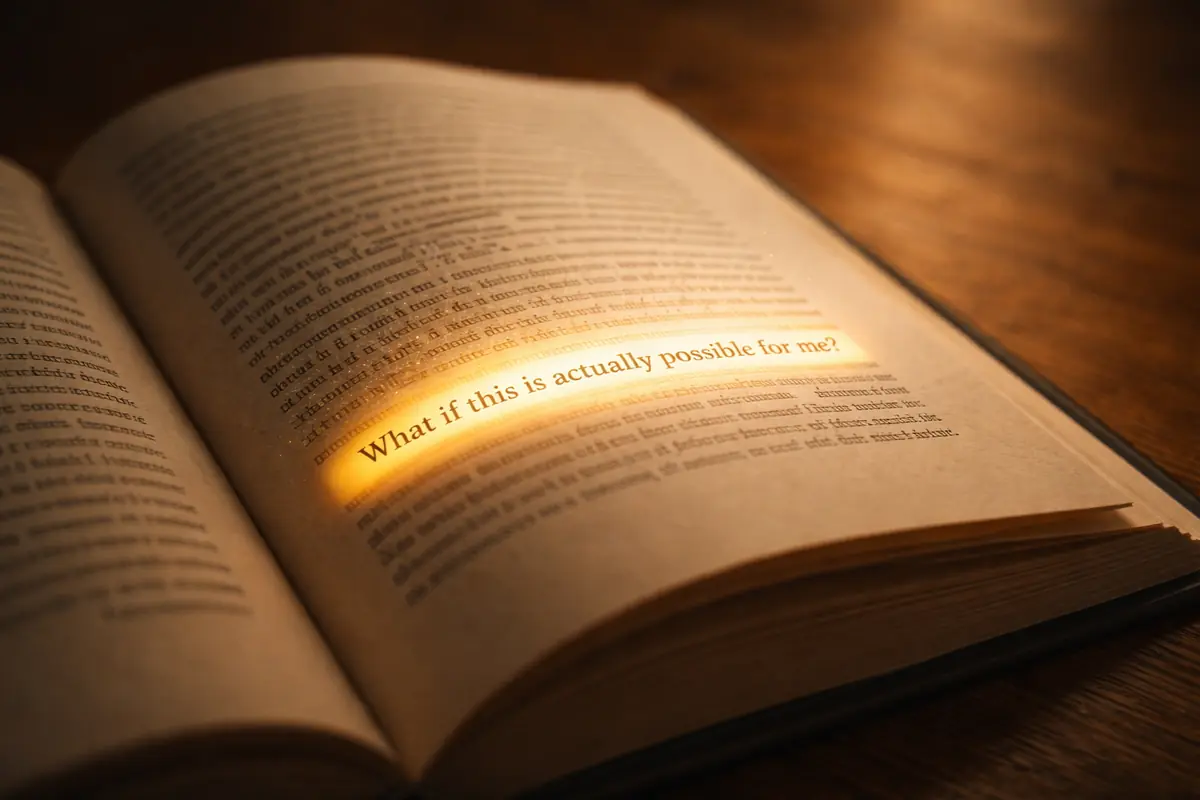
The most dangerous idea in any book isn’t controversial or dramatic. It isn’t even necessarily new. It’s the idea that makes you pause and think: What if this is actually possible for me?
Because once an idea feels possible, it stops being theory. It becomes a mirror.
You can read about discipline, success, faith, leadership, or creativity a hundred times without changing anything. But when a sentence lands at exactly the right moment — when it connects with your current reality — something shifts. You can’t “unknow” it anymore.
A dangerous idea removes your excuses.
It closes the distance between admiration and responsibility. Before that moment, you can keep treating the insight as something meant for wiser people, braver people, or people with different circumstances. Once it feels personal, that escape route narrows.
A biography might quietly suggest that ordinary people can build extraordinary lives. A philosophy book might suggest your suffering isn’t meaningless. A business book might suggest you don’t have to stay where you are. None of these ideas are explosive on their own. But when they move from abstract to personal, they become disruptive.
And disruption is uncomfortable.
That’s why we sometimes close a book right after reading something that hit too close to home. Not because we disagree — but because we recognise ourselves in it. Growth rarely feels pleasant at first. It feels like tension.
The power of books isn’t just in information. It’s in possibility.
History is full of moments shaped by words on a page. Movements began with pamphlets. Reforms began with essays. Personal transformations began with underlined sentences read late at night. The written word has always carried quiet force.
Most reading leaves your opinions intact. The dangerous books do something rarer. They interrupt the story you have been telling yourself about what is fixed, what is allowed, and what kind of person you are.
But here’s the twist: the idea itself isn’t dangerous. Your response to it is.
You can ignore it. Highlight it and move on. Or you can let it rearrange your thinking. That choice determines whether the book was merely interesting — or life-altering.
And that is why serious reading can feel risky in the best way. A book cannot force change, but it can remove your ability to pretend you never saw the door.
So next time a sentence makes you uncomfortable in the best way, pay attention. That’s usually the signal. That’s the idea trying to take root.
The safest books entertain you.
The most dangerous ones make you reconsider who you are — and who you could become.