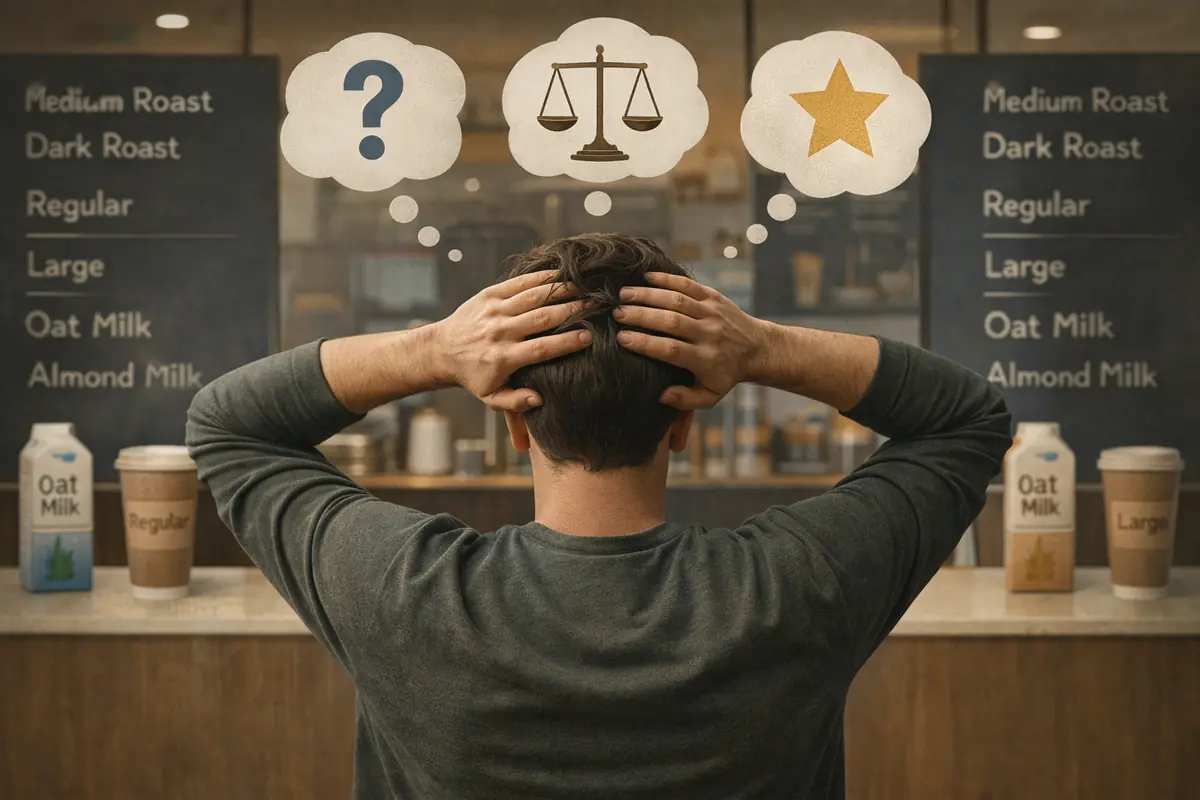
Ask someone if they trust AI and they’ll probably hesitate. Watch how they use it and the hesitation disappears. They’ll ask it to draft the email, plan the trip, debug the code — then edit everything it produces. That gap between doing and believing is one of the more interesting things happening right now.
This isn’t hypocrisy or confusion. It reflects a genuine and arguably rational split: behavioral trust versus epistemic trust. Behavioral trust means relying on something to help you act. Epistemic trust means accepting what it tells you as true. People extend the first to AI fairly readily. The second is harder to give.
The pattern appears across how people interact with AI tools. Someone uses a chatbot to write a first draft of a cover letter, then rewrites nearly every sentence. Another person asks an AI to explain a medical symptom, reads the answer carefully, and then Googles it anyway. A developer uses AI to generate code, then reviews it line by line before running it. The tool is useful. The output is not trusted.
This isn’t entirely new. GPS navigation triggered a similar dynamic for years — people followed the route but second-guessed it when it seemed wrong. Autocorrect gets used constantly but reviewed constantly too. What’s different with AI is the scope: it generates language, reasoning, and apparent knowledge, not just directions or word suggestions. The surface area for doubt is much larger.
There’s also a social dimension. Being caught having fully believed an AI output — especially a wrong one — carries a particular kind of embarrassment. It signals a failure of judgment. So people maintain visible skepticism even as they depend on the tool. The disclaimer “I had AI help with this” has become a form of pre-emptive credibility management.
What this reveals is less about AI and more about how trust actually works. Trust, in most human contexts, isn’t binary. It’s partial, provisional, and domain-specific. You trust your accountant with numbers but not necessarily with investment advice. You trust a friend’s restaurant recommendations but not their medical opinions. Extending calibrated, partial trust to AI isn’t a cognitive failure — it’s a sensible response to a tool with real capabilities and real failure modes.
The instinct to stay in the loop — to use AI but verify, to delegate but not abdicate — is probably the right one. AI systems hallucinate, confabulate, and reflect the biases in their training data. Epistemic caution is warranted. The interesting question isn’t why people don’t fully believe AI. It’s whether that caution will hold as the tools get better, the outputs get harder to check, and the temptation to just accept the answer quietly grows.
Using something and believing it are different acts. Keeping them separate, for now, is not a contradiction. It might be wisdom.