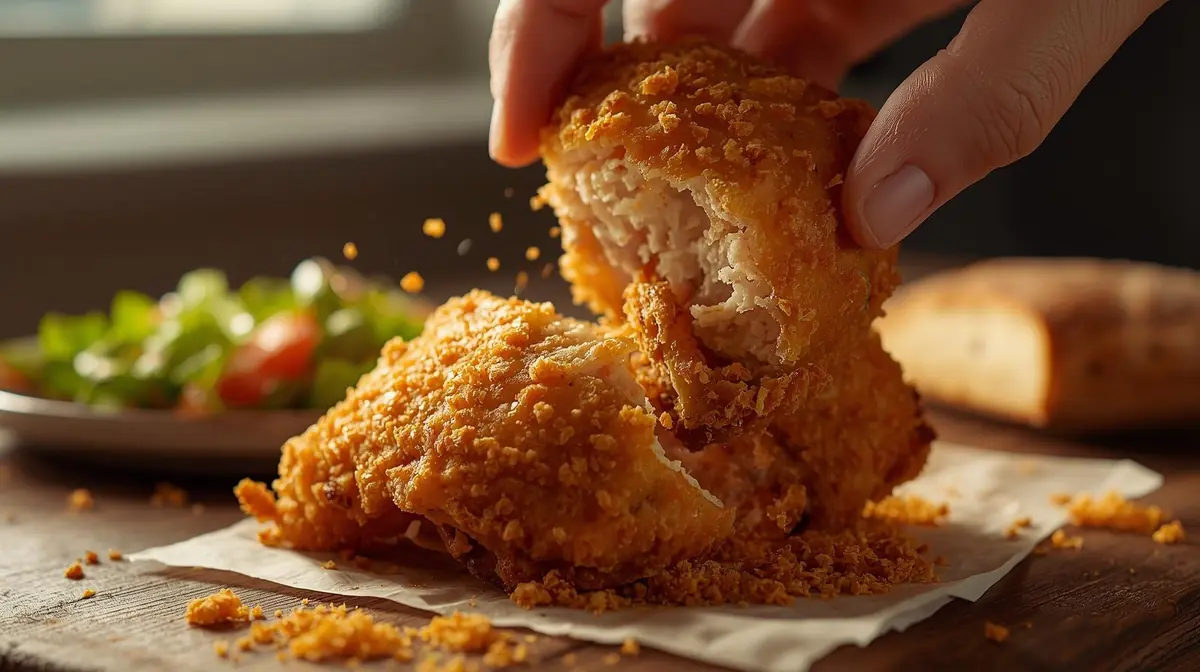
Why does a fresh apple feel more satisfying than a soft one? Why does crispy chicken seem more flavorful than the exact same chicken when it’s soggy?
The answer isn’t just taste — it’s sound.
Your Ears Are Part of Eating
When you bite into something crunchy, your brain processes more than flavor. It hears the crackle, the snap, the crisp fracture. That sound signals freshness and quality before your taste buds even finish their job.
Researchers studying sensory perception have found that people consistently rate food as fresher and more enjoyable when the crunch is louder. Even artificially increasing crunch sounds through headphones can make snacks seem crispier.
In other words, your ears are quietly influencing your appetite.
Crunch Signals Freshness
From an evolutionary standpoint, crisp textures often meant safe, fresh food. A crunchy carrot was likely fresh from the ground. A crisp apple wasn’t spoiled. A crackling crust suggested properly baked bread.
Softness, by contrast, could signal decay.
Your brain still carries that ancient wiring. When something crunches, it sends a subconscious message: This is good. This is fresh. This is safe.
That message enhances perceived flavor.
Texture Multiplies Taste
Flavor isn’t a single sense — it’s a combination of taste, smell, temperature, and texture. Crunch adds contrast, and contrast heightens experience.
Think about:
- Creamy ice cream with crunchy nuts
- Soft pasta topped with toasted breadcrumbs
- A juicy burger layered with crisp lettuce
Without the crunch, the dish feels flat. Add it back, and suddenly the same ingredients feel dynamic and exciting.
The crisp texture keeps your brain engaged. Each bite becomes an event rather than a repetition.
Silence Makes Food Feel Dull
Have you ever eaten chips when they’ve gone stale? The flavor may still be there, but the experience feels disappointing. The absence of crunch reduces satisfaction, even if the seasoning hasn’t changed.
It’s not just imagination. When the auditory feedback disappears, the brain registers the food as lower quality.
Crunch doesn’t just complement taste — it amplifies it.
The Hidden Ingredient
Professional chefs understand this instinctively. Many high-end dishes intentionally include a crunchy element — toasted seeds, crispy skin, caramelized edges — even in soft meals.
It is also why reheating methods matter. The oven and air fryer restore crispness better than the microwave, which often softens the very texture that made the food satisfying in the first place. When cooks chase crunch, they are not being precious. They are protecting a major part of flavor.
It’s not decoration. It’s design.
Crunch is the hidden ingredient that makes food feel alive.
Next time you cook, pay attention to texture. A simple sprinkle of toasted nuts or a quick pan-sear for a golden crust might transform the entire meal.
Because sometimes, what makes food taste better isn’t what you taste at all — it’s what you hear.