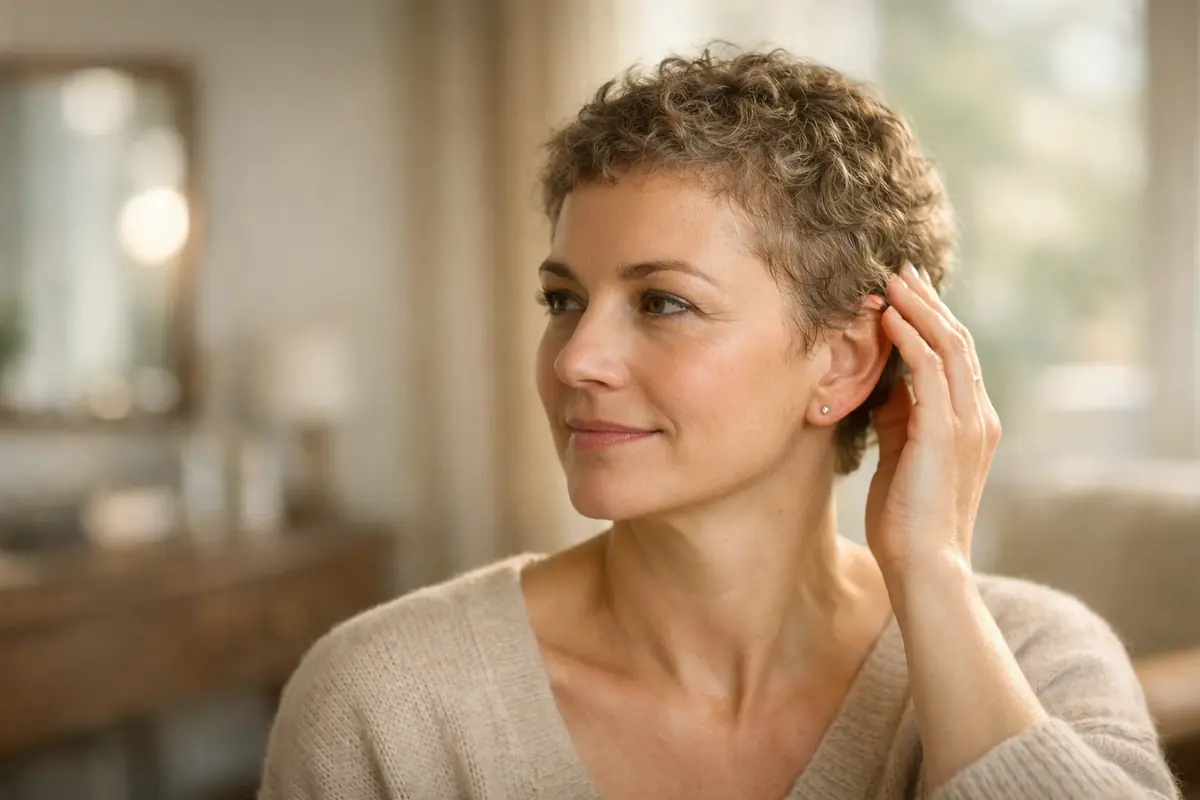
If your hair grew back curly after chemotherapy when it was straight before, you are not imagining it. The change is common enough to have a nickname: chemo curl. For some people it is subtle. For others, regrowth feels like an entirely different head of hair.
Chemotherapy affects rapidly dividing cells, and hair follicles are among the fastest-dividing cells in the body. That is why hair loss is so common during treatment. When follicles recover, they do not always resume their old pattern immediately. Texture, thickness, density, and even color can shift during the regrowth phase.
Hair may come back curlier, finer, coarser, drier, or more frizzy than before. That can be emotionally difficult because regrowth often carries hope, relief, and vulnerability all at once. People expect familiar hair to return. Instead, they may get hair that behaves differently at every stage.
Is it permanent? Often not. Many people find that texture gradually moves closer to its old pattern as follicles continue recovering. But sometimes the change lasts much longer, and for some it becomes the new normal. Regrowth after chemo is rarely linear. It can change in waves before settling.
That unpredictability is part of why the experience can feel so strange. Hair is not medically essential, but it is emotionally visible. When regrowth behaves differently, many people feel grateful and unsettled at the same time.
What helps most is working with the hair you have now instead of forcing it back into its old identity. A stylist familiar with post-chemo regrowth can shape a cut around the new texture. Moisture also matters more than many people expect. Gentle shampoos, deep conditioning, and lightweight oils can make fragile new growth softer and easier to manage.
Gentleness matters too. Frequent heat styling, harsh brushing, and strong chemical treatments can add stress during the most unpredictable months. If regrowth seems unusually weak or slow, it may also be worth asking a clinician about basics like iron, vitamin D, or zinc rather than guessing with random supplements.
Some people also find that scalp comfort needs attention during regrowth. A dry or sensitive scalp can make new hair feel harder to manage, so mild products and less friction often help more than aggressive routines.
The reassuring part is this: chemo curl usually means your hair is returning, even if it is returning differently. With patience, gentle care, and a little flexibility, many people find the regrowth phase becomes easier to live with over time.
This article contains affiliate links. We may earn a small commission if you buy through them, at no extra cost to you.
Worth considering
SheaMoisture Manuka Honey & Mafura Oil Intensive Hydration Shampoo — Gentle enough for fragile regrowth, with a moisturising formula that reduces dryness without stripping new hair.
Mielle Organics Rosemary Mint Strengthening Hair Mask — A deep conditioning treatment designed to strengthen and hydrate. Useful during the more unpredictable months of post-chemo regrowth.
Kitsch Satin Pillowcase — Reduces overnight friction on delicate new growth. A small change that can make a noticeable difference in breakage and texture over time.
These are comfort-focused product suggestions, not medical treatment.