We often think the future of mobility is about smarter cars. But what if the real transformation isn’t happening inside the vehicle — it’s happening beneath the asphalt?
A quiet revolution is turning roads into digital communicators. Traffic lights, intersections, parking spaces, and even highway signs are beginning to send data directly to vehicles. It’s called V2I — Vehicle-to-Infrastructure communication — and it could reshape how we drive.
The Road as a Data Network
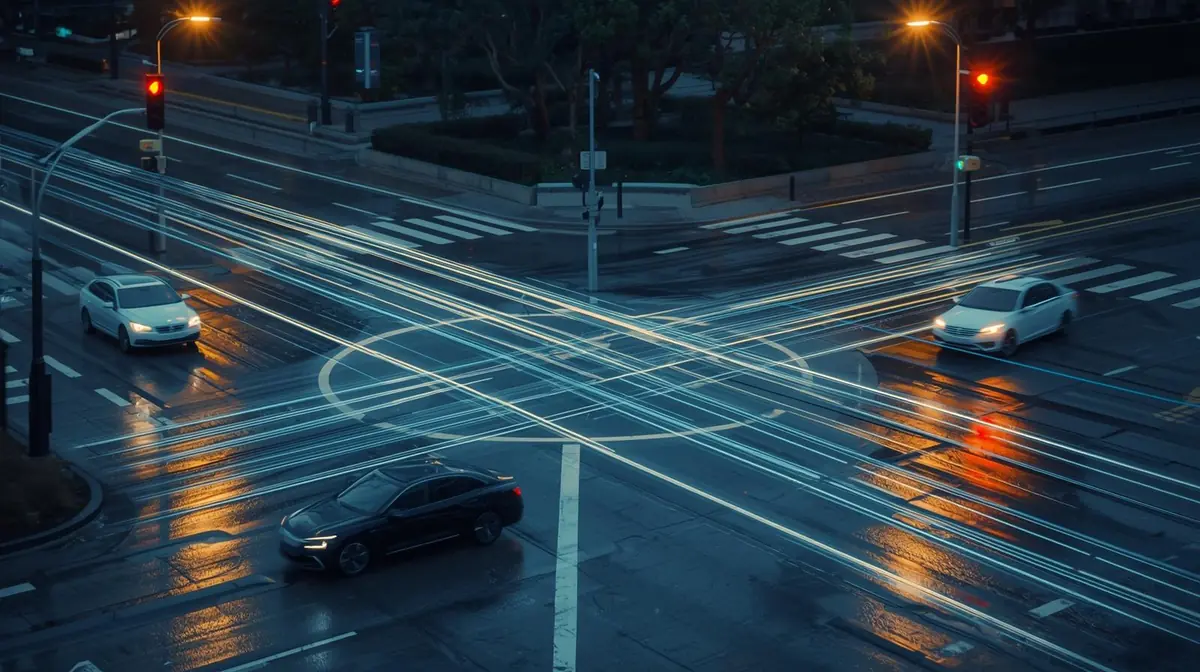
Imagine approaching an intersection and your car already knows the traffic light will turn red in five seconds. Instead of braking abruptly, it gently adjusts speed. Now imagine that same system alerting your car about black ice around the next bend — before you see it.
That’s the promise of connected infrastructure.
Sensors embedded in roads monitor temperature, congestion, and road conditions. Smart traffic lights track vehicle density. Cameras and radar systems detect pedestrians and cyclists. All of that data can be transmitted in real time to compatible vehicles.
The result? Fewer surprises. Fewer sudden stops. Fewer accidents.
Traffic That Flows Instead of Clots
Traffic congestion often happens because drivers react individually instead of collectively. When infrastructure shares data, vehicles can synchronize movement.
If 200 cars approaching a junction know exactly when lights will change, they adjust speed smoothly instead of accelerating and braking in waves. These “traffic shockwaves” — those frustrating stop-start moments on highways — can dramatically decrease.
Studies suggest smart coordination could reduce congestion by double-digit percentages in busy cities. That means shorter commutes, less fuel burned, and lower emissions — without building new roads.
Safety Beyond Human Reaction Time
Humans react in roughly one second. At highway speeds, that’s a lot of distance. Connected infrastructure can react instantly.
For example:
- A stalled vehicle ahead triggers an alert miles before drivers see hazard lights.
- A pedestrian stepping into a blind intersection activates warning signals.
- Emergency vehicles communicate their approach to clear traffic faster.
This isn’t autonomous driving replacing humans. It’s infrastructure supporting them.
The Invisible Upgrade
What makes this shift fascinating is that it’s mostly invisible. Unlike flashy electric vehicles or futuristic dashboards, infrastructure upgrades happen quietly. Cities install smart poles, 5G units, and edge computing systems. Drivers might not even realize their smoother commute is powered by digital asphalt.
It’s less about owning a smarter car — and more about driving on smarter roads.
The Bigger Picture
The future of mobility may not belong to the biggest engine or the longest range battery. It may belong to systems that think collectively.
When vehicles and infrastructure share information, roads stop being passive surfaces. They become participants.
And one day, you may look back at today’s roads the same way we look at old maps — static, silent, and surprisingly inefficient.