Why You Shouldn't Wash Raw Chicken, and What Actually Keeps You Safe
Nearly half of cooks rinse raw chicken to make it cleaner. It doesn't, and the research points to a bigger risk most kitchens overlook.
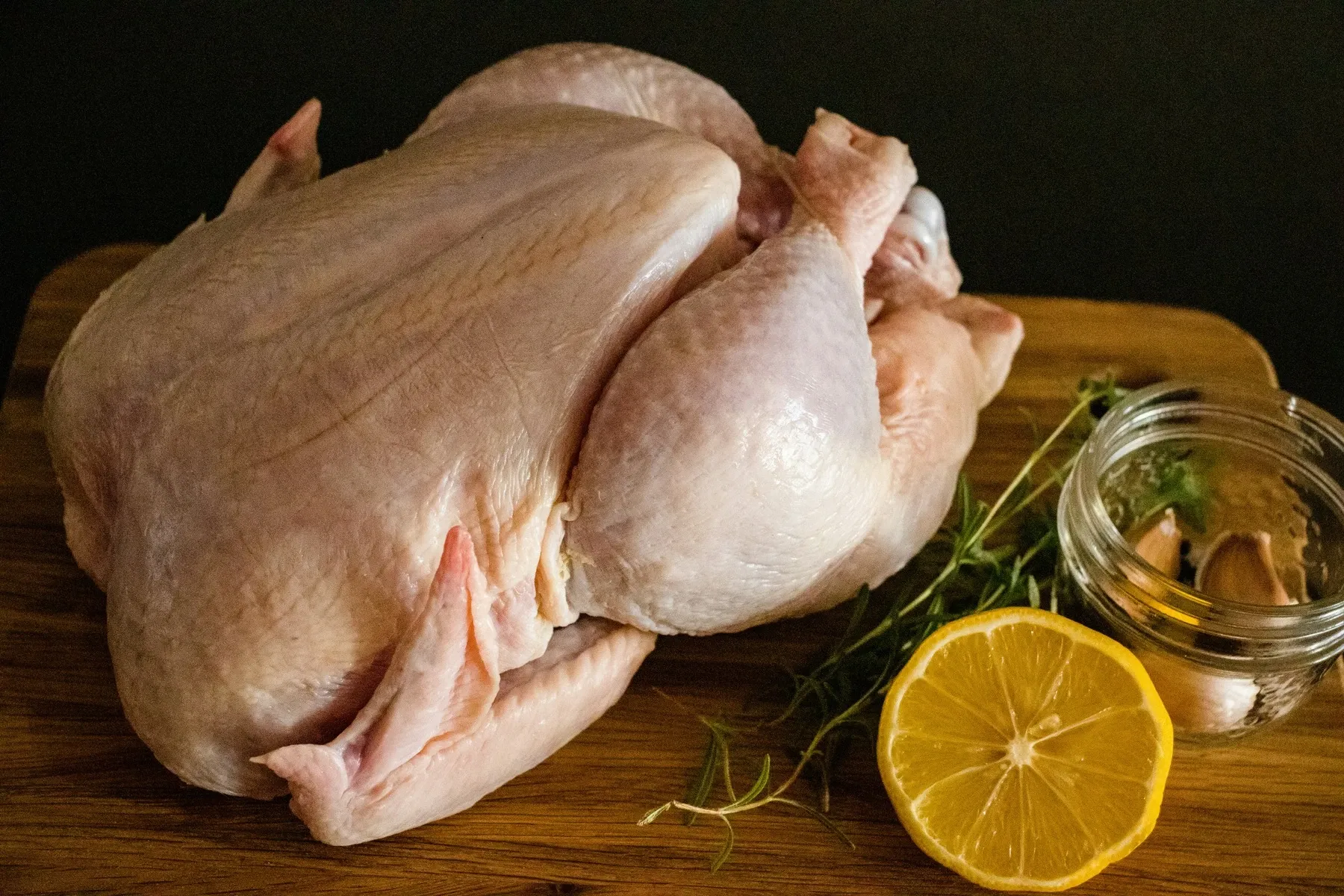
Nearly half of British cooks rinse raw chicken under the tap before cooking it. In a 2014 survey of 4,500 adults by the Food Standards Agency, 44% said they did. It feels like basic hygiene. It isn’t.
What rinsing can’t do
Raw chicken often carries bacteria such as Campylobacter and Salmonella. Campylobacter is the most common bacterial cause of food poisoning in the UK, and food safety agencies estimate that about four in five cases come from poultry.
Running water does not reliably wash these bacteria off. What kills them is heat: cooking the chicken until the thickest part reaches at least 74 °C (165 °F), with no pink meat and juices that run clear. Whatever a rinse might remove, the pan would have killed anyway.
What rinsing does do
Researchers at Drexel University, in work funded by the US Department of Agriculture, showed that the water can carry bacteria from the chicken onto worktops, towels and nearby food.
In 2022, researchers at Montana State University filmed chicken being washed with a high-speed camera and caught the spray on large culture plates. Bacteria travelled from the meat to the surrounding surfaces. A tap running from about 40 cm high threw droplets much further than one at about 15 cm.
The twist: your hands and your sink
In 2019 the USDA watched 300 people cook a chicken meal in test kitchens, with the chicken marked by a tracer bacterium. Among those who washed their chicken, 60% left the tracer in the sink, and 14% still had it there after cleaning the sink. About a quarter transferred it to the salad they made next.
But people who did not wash their chicken contaminated their salads at a similar rate. The researchers traced most of the spread to poor handwashing and to dirty surfaces and utensils. A 2022 follow-up found that simply telling people not to wash chicken worked: 93% of those who got the advice skipped the rinse. Its authors still concluded that the bigger message is clean hands and clean surfaces.
What to do instead
- Take chicken straight from the packet to the pan.
- Make salads and anything eaten raw before you handle raw meat.
- After touching raw chicken, wash your hands with soap and clean the board, knife and sink.
- Cook it through, to at least 74 °C in the thickest part.
The takeaway
Rinsing chicken feels like cleaning, but it mostly moves bacteria around. Skip it, and put the effort where the risk really is: your hands, your chopping board and your sink.
Sources & further reading
- 01Food Standards Agency (2014). Survey of 4,500 UK adults and 'Don't wash raw chicken' campaign, Food Safety Week.
- 02Food Standards Scotland. Campylobacter: how it affects you (factsheet).
- 03USDA Food Safety and Inspection Service (2019). Food Safety Consumer Research Project: meal preparation experiment on raw poultry washing. Final report, with RTI International and North Carolina State University.
- 04Observational study of the impact of a food safety intervention on consumer poultry washing (2022). Journal of Food Protection, 85(4), 615–625.
- 05Carmody, C. D. et al. (2022). Chickensplash! Exploring the health concerns of washing raw chicken. Physics of Fluids, 34(3).
- 06Drexel University. Don't Wash Your Chicken (USDA-funded research by Jennifer Quinlan).